Sensing & Measurement Layer

Sensing & Measurement

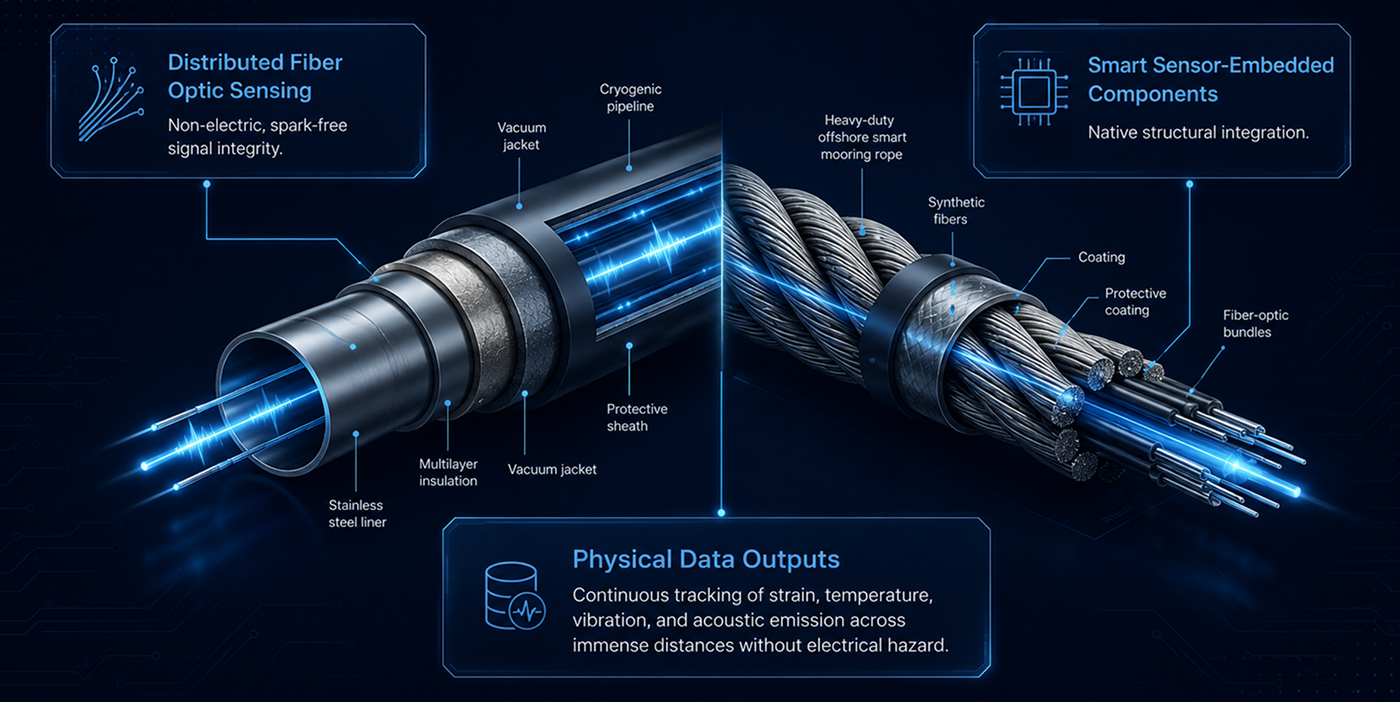
Sensing & Measurement Layer captures physical signals from industrial assets through fiber optic sensing, distributed sensing,
interrogation systems, and smart sensor-embedded structures.

Key Technologies

  • Fiber Optic Sensing
  • Distributed Fiber Optic Sensing
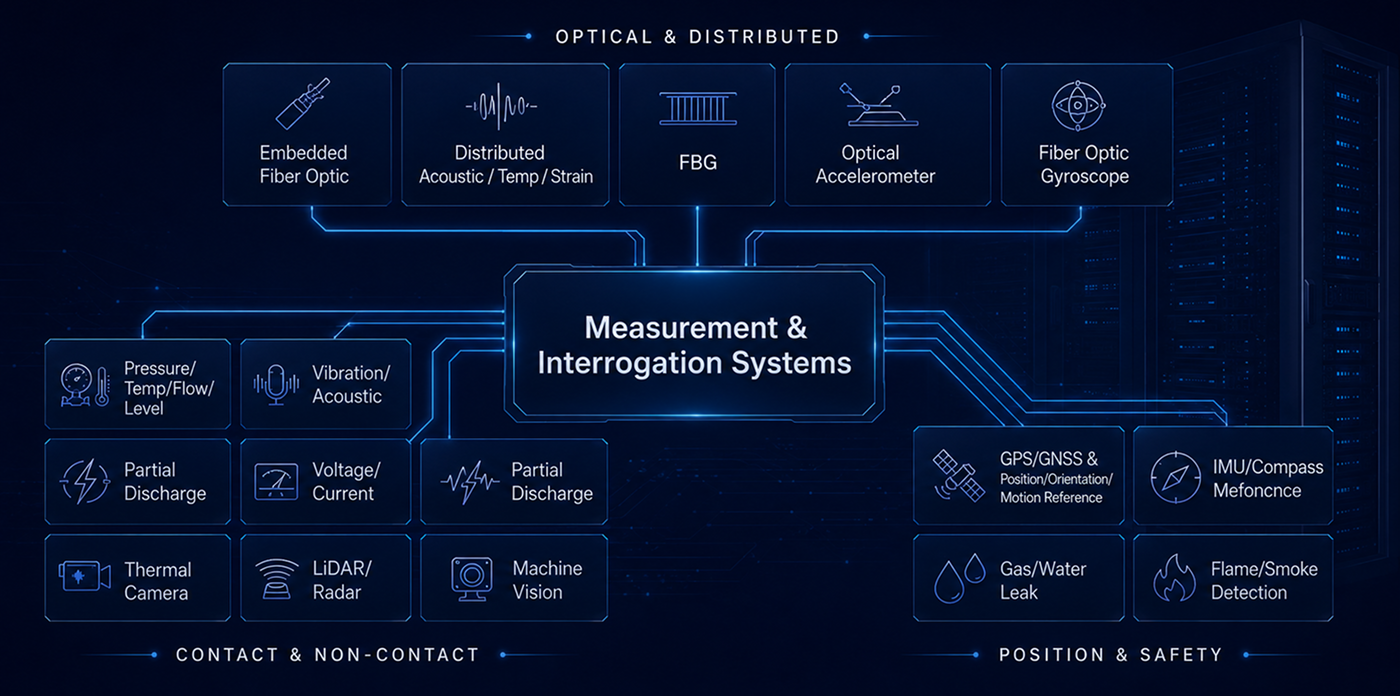
  • Measurement & Interrogation Systems
  • Smart Sensor-Embedded Components
Sensing and Measurement architecture

Sensor-To-Signal Mapping

SENSOR CATEGORIES

Optical & Fiber

DAS, DTS, DSS, FBG sensor, optical interrogator, fiber optic strain

Motion & Dynamics

IMU, Fiber Optic Gyroscope, FBG-based Optical Accelerometer, DOF motion sensing, vibration, load cell, torque

Process & Fluid

Pressure, temperature, flow, level, density, viscosity, conductivity, pH/ORP

Advanced Detection

Gas/liquid analyzer, acoustic, emission, ultrasonic, thermal camera, infrared, LIDAR, radar, machine vision

Safety & Electrical

Gas leak, water leak, flame/smoke/heat, partial discharge, voltage, current, GPS/GNSS

TARGETED RISK INDICATORS

  • Temperature anomaly
  • Leakage signal
  • Vibration
  • Structural strain
  • Cable risk
  • Thermal behavior
  • Pressure transient
  • Partial discharge
  • Sloshing dynamics
  • Vacuum / optical alignment stability
  • Timing synchronization drift
  • Safe / Stable State Output

Signal to Meaning (The Interrogation)

Raw physics is translated into standardized digital telemetry at the edge, ensuring deterministic, low-latency data
availability for enterprise SCADA and cloud ecosystems.
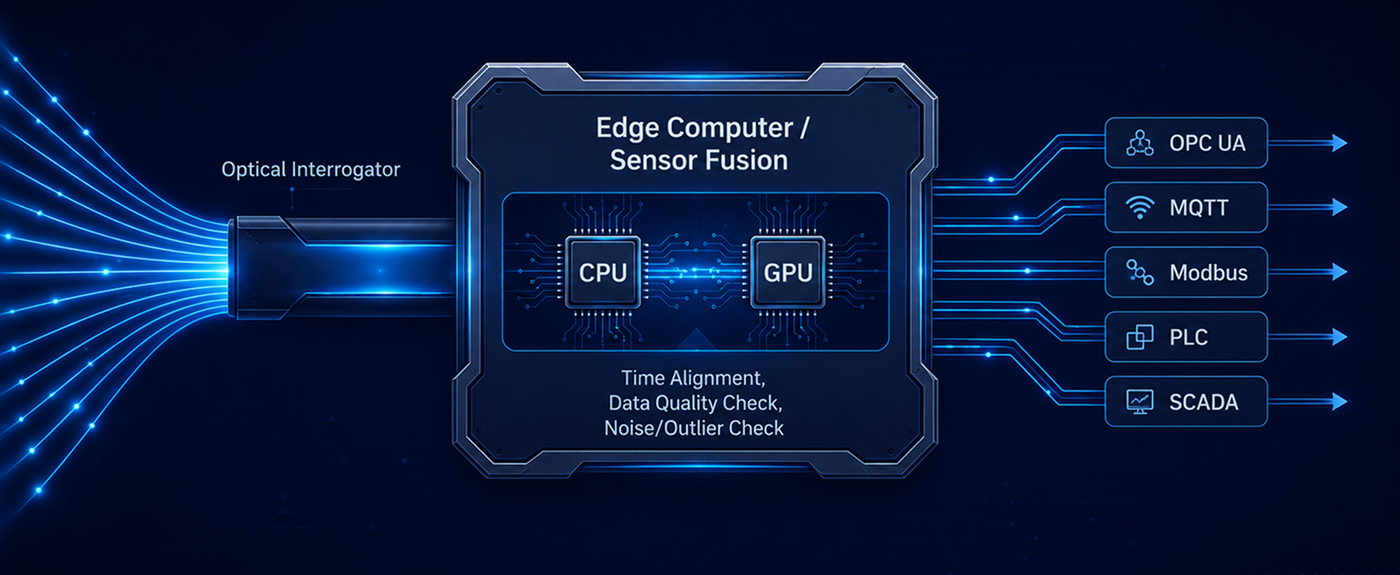
Signal to Meaning interrogation architecture

Sensing & Interrogation (Center)

Sensing and Interrogation Center

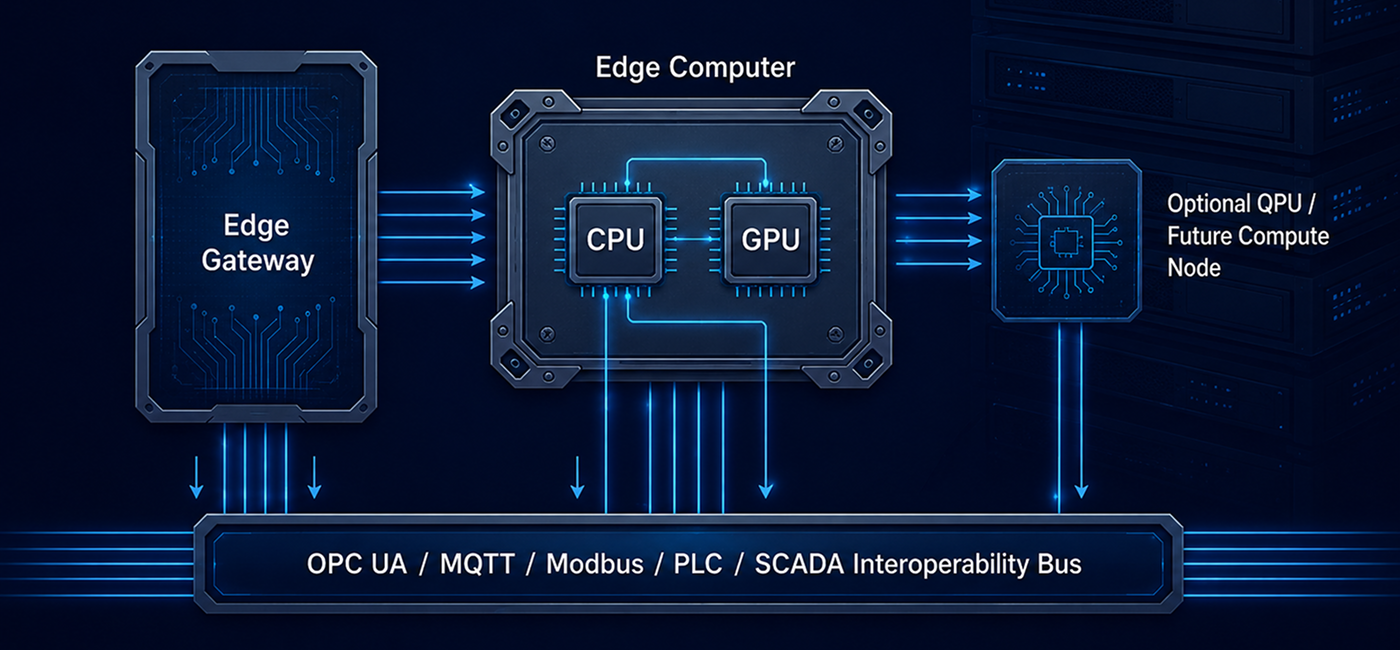
Edge Compute & Interoperability

Edge Compute and Interoperability architecture
Back to top

Agreement on Collection and Use of Personal Information

CyTroniQ Co., Ltd. explains through this notice how personal information provided by users is used and protected.

Purpose of Collection and Use of Personal Information

- Identification and verification of users for service usage, confirmation of intent to register, and provision of age-restricted services
- Fulfillment of contracts related to service provision, billing and payment processing, content provision, product delivery, and invoice issuance
- Delivery of notices, handling complaints, securing communication channels, and ensuring accurate delivery information
- Provision of customized services and information on new services and updates
- Other purposes necessary for smooth and high-quality service operation

Items of Personal Information Collected

- Name, company name, email address, address, contact number, mobile phone number, inquiry details, and other optional information

Retention and Use Period of Personal Information

- In principle, personal information is destroyed without delay once the purpose of collection or provision has been achieved.
- However, for smooth customer consultation services, records may be retained for up to 3 months after completion of consultation.
- Information may also be retained for a certain period if required by applicable laws such as the Consumer Protection Act in Electronic Commerce.

Procedure and Method of Destruction of Personal Information

CyTroniQ Co., Ltd. destroys personal information without delay once the purpose of collection and use has been fulfilled.
Information entered by users for membership registration or other purposes is transferred to a separate database (or stored in separate filing cabinets for paper documents)
and retained for a certain period according to internal policies and relevant laws before being destroyed.
Personal information transferred to a separate database is not used for any purpose other than those permitted by law.
Electronic files containing personal information are deleted using technical methods that make the records unrecoverable.

Unauthorized Email Collection Rejection

CyTroniQ Rejects Unauthorized Collection of Email Addresses.

The unauthorized collection of email addresses posted on this website using email collection programs or other technical devices is strictly prohibited. Violators may be subject to punishment under the Act on Promotion of Information and Communications Network Utilization and Information Protection.